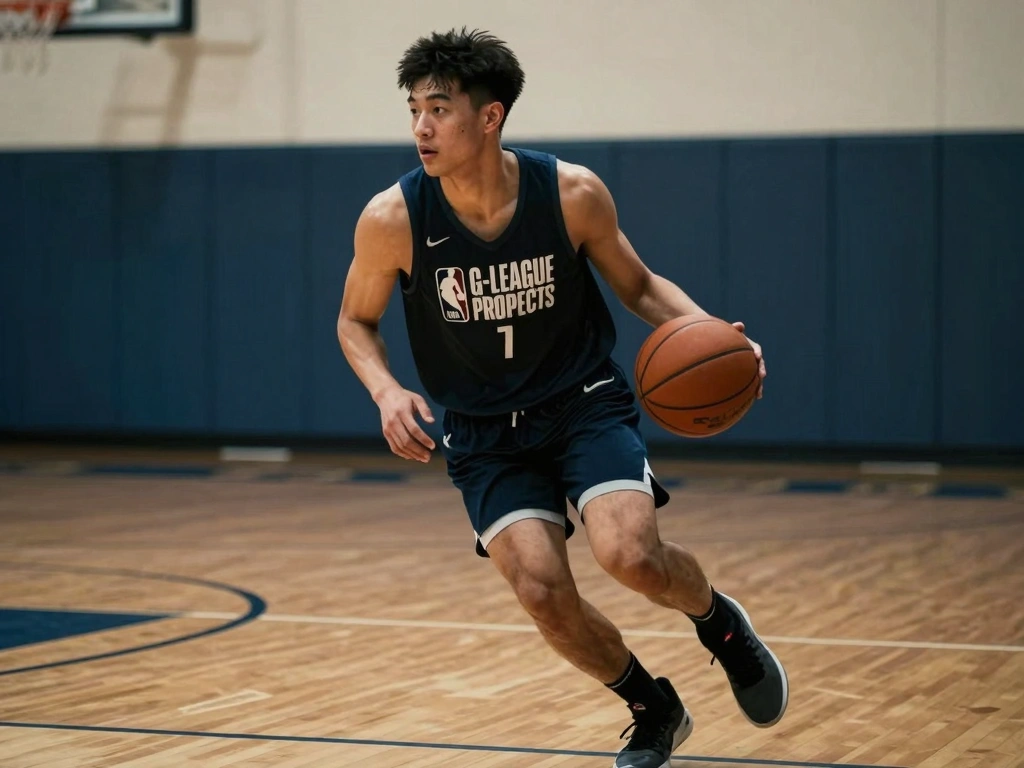
The Role of NBA G-League Contracts in Player Development
The NBA G-League, formerly known as the NBA Development League (D-League), serves as a crucial platform for young basketball players aspiring to make it to the NBA. As the league continues to evolve, understanding how G-League contracts influence draft prospects is essential for players, teams, and agents alike. These contracts not only serve as a financial arrangement but also play a pivotal role in shaping a player’s career trajectory. This article delves into the various aspects of G-League contracts and their impact on draft prospects.
Skill Enhancement Through Competitive Play
One of the primary benefits of G-League contracts is the opportunity for players to enhance their skills through competitive play. The G-League is often considered a more competitive environment than college basketball, as it features players who are closer to the professional level. According to the G-League's official statistics, over 50% of players in the league have previous NBA experience, which creates a challenging landscape for newcomers.
For example, players like Jordan Poole and Gary Payton II utilized their time in the G-League to refine their skills. Poole, drafted 28th overall by the Golden State Warriors in 2019, spent significant time in the G-League during his rookie year, where he improved his shooting and decision-making skills. His development in the G-League allowed him to return to the NBA more prepared and confident, ultimately leading to a breakout season.
Coaching and Training Opportunities
The G-League also provides players with access to high-caliber coaching and training resources. Each G-League team employs professional coaches who focus not only on winning games but also on player development. This coaching staff often includes former NBA players and coaches who can provide invaluable insights and mentorship.
For instance, Jalen Green, the second overall pick in the 2021 NBA Draft, spent time in the G-League Ignite program, where he was coached by seasoned professionals. This experience allowed him to develop a professional mindset and adapt to the rigors of the NBA, setting him up for a successful career.
Exposure to NBA-Level Competition
Playing in the G-League offers draft prospects crucial exposure to NBA-level competition. This experience can significantly boost a player’s confidence and readiness for the challenges of the NBA. Scouts and executives closely monitor G-League games, as performance in this league can influence draft stock and team decisions.
For example, Alen Smailagic, who played for the Santa Cruz Warriors, had his draft stock rise after showcasing his skills in the G-League. By competing against seasoned professionals, Smailagic improved his game and caught the attention of NBA scouts, eventually being drafted by the Golden State Warriors in 2019.
Financial Implications of G-League Contracts for Draft Prospects
Understanding Contract Structures and Salaries
G-League contracts come in various forms, including standard contracts, two-way contracts, and exhibit contracts. The standard G-League contract typically offers a salary that is significantly lower than an NBA contract but provides a stable income for young players. As of the 2023 season, the base salary for a standard G-League player is approximately $40,000, while two-way contracts, which allow players to split time between the G-League and NBA, can reach up to $500,000.
This flexible structure enables players to gain financial independence while still pursuing their NBA aspirations. For instance, Louis King signed a two-way contract after a successful stint in the G-League, earning him a chance to play with the Detroit Pistons while also receiving a G-League salary.
Long-term Financial Stability vs. NBA Draft Aspirations
While G-League contracts provide some financial stability, they often come with a trade-off. Players must weigh the benefits of immediate earnings against the potential long-term financial rewards of an NBA contract. This dilemma can influence a player’s decision-making process regarding whether to enter the G-League or pursue other pathways, such as overseas play or remaining in college.
Some players, like Ignas Brazdeikis, opted to play in the G-League after college, where he earned a substantial salary compared to what he might have received in a lower-tier league overseas. This decision allowed him to maintain a direct path to the NBA while ensuring financial security in the interim.
Impact on Agent Negotiations and Endorsements
The presence of G-League contracts also affects negotiations with agents and potential endorsement deals. Players who demonstrate exceptional performance in the G-League often have increased leverage when negotiating contracts and endorsements. With the visibility provided by the G-League, players can attract attention from brands and sponsors.
For instance, Cassius Winston, who played in the G-League after college, secured multiple endorsement deals due to his impressive performances, which made him a marketable asset in the eyes of companies eager to associate with rising basketball talent.
G-League as a Stepping Stone to the NBA
Success Stories: Players Who Transitioned from G-League to NBA
Many players have successfully transitioned from the G-League to the NBA, showcasing the league's effectiveness as a developmental platform. Notable success stories include Fred VanVleet, who went undrafted in 2016 but made a name for himself in the G-League. After winning the G-League Championship, he signed with the Toronto Raptors and became an integral part of their championship-winning team in 2019.
Another example is Chris Boucher, who also played in the G-League before making a significant impact in the NBA. His journey illustrates how the G-League can provide the necessary experience and exposure needed for players to succeed at the highest level.
Performance Metrics That Attract NBA Scouts
Performance in the G-League is closely monitored by NBA scouts. Metrics such as points per game, shooting percentages, and defensive statistics are critical indicators of a player’s potential. For example, players who consistently score over 20 points per game or maintain a shooting percentage above 40% from three-point range often catch the eyes of scouts.
Moreover, advanced analytics, such as player efficiency ratings (PER) and win shares, have become essential tools for evaluating G-League talent. Players who excel in these metrics not only improve their draft prospects but also enhance their chances of securing a long-term contract in the NBA.
Timing of G-League Contracts in Relation to Draft Year
The timing of signing a G-League contract can significantly influence a player’s draft year and subsequent opportunities. Prospects who enter the G-League early in their careers often have more time to develop their skills and showcase their talent before the draft. Conversely, players who sign G-League contracts close to the draft may face challenges in making a lasting impression.
For instance, Isaiah Todd signed with the G-League Ignite team ahead of the 2021 NBA Draft, allowing him to develop his skills in a competitive environment while also attracting the attention of NBA scouts. His early entry into the G-League provided him with a unique opportunity to showcase his abilities leading up to the draft.
Perception of G-League Contracts Among NBA Teams
How G-League Performance Influences Draft Stock
NBA teams increasingly consider G-League performance when evaluating draft prospects. A strong showing in the G-League can significantly boost a player's draft stock. For example, Tyrese Maxey played in the G-League bubble during the pandemic, where he showcased his scoring ability and playmaking skills, eventually leading the Philadelphia 76ers to select him in the first round of the 2020 NBA Draft.
Scouts often prioritize players who excel in the G-League, as it serves as a reliable indicator of how they may perform in the NBA. The G-League’s competitive nature provides a clearer picture of a player’s readiness for the professional league.
Team Strategies in Scouting G-League Talent
NBA teams have developed specific strategies for scouting G-League talent. Many teams employ dedicated scouts who focus solely on G-League games, analyzing player performances and identifying potential draft prospects early in the season. This proactive approach allows teams to discover hidden gems who may not have received significant attention in college or overseas.
For example, the Toronto Raptors have successfully utilized G-League scouting to find players like Pascal Siakam, who made his way from the Raptors 905 (the team’s G-League affiliate) to the NBA, where he became an All-Star. Such success stories underscore the importance of G-League scouting in team strategies.
Comparative Analysis: G-League vs. College Basketball
When comparing the G-League to college basketball, several factors come into play for draft prospects. The G-League offers a more professional environment, competitive play, and the ability to earn income while developing skills. In contrast, college basketball emphasizes athleticism and team play but may not provide the same level of exposure to professional competition.
Players like LaMelo Ball, who chose to play overseas and in the G-League rather than college, demonstrated that alternative paths can lead to successful NBA careers. The decision between the G-League and college often hinges on a player's readiness for professional play and their long-term career goals.
Challenges and Opportunities for Prospects in the G-League
Balancing Development and Immediate Performance Pressure
While the G-League provides ample opportunities for development, players must also contend with immediate performance pressure. G-League teams are often focused on winning games, which can lead to situations where a player’s development may take a backseat to short-term success. This can be particularly challenging for young prospects who are still adjusting to the professional game.
For instance, a player like Tremont Waters, who excelled in the G-League but faced pressure to deliver results, had to navigate the fine line between individual development and team expectations. Balancing these factors is crucial for players looking to make a successful transition to the NBA.
Injury Risks and Career Longevity
Injuries pose a significant risk for players in the G-League, as they do in any professional sports league. The physical demands of the game, combined with the pressure to perform, can lead to injuries that may derail a player’s career. This risk is compounded for draft prospects who are keen on showcasing their skills for NBA teams.
For example, Jared Harper faced injury challenges during his G-League career, which impacted his ability to secure a spot on an NBA roster. Such circumstances highlight the importance of injury management and recovery strategies for players looking to maximize their G-League experience.
Leveraging G-League Experience for Future Opportunities
Despite the challenges, players can leverage their G-League experience for future opportunities. Performing well in the G-League can lead to additional contracts, both in the NBA and overseas. Players like Joe Chealey, who had a standout season in the G-League, used their performance to secure opportunities in international leagues, proving that G-League experience can open doors beyond the NBA.
Ultimately, the G-League serves as a valuable training ground for young players, providing them with the skills, exposure, and experience necessary to succeed at the highest level of basketball.